The Surprising Digital Rebirth of Poetry's Ancient Voice
12 August 2026
Poetry did not vanish. It was pushed out of the places that once made it feel public, then declared dead by people who stopped looking in the new rooms where it kept speaking.
The obituary wrote itself in a familiar way. Poems moved out of newspapers and magazines, classrooms turned them into exam questions, and the internet trained everyone to expect faster, flatter text. Then rap took over the rhythm, Instagram turned short verse into a shareable object, and open mic nights filled again with the kind of crowd poetry lost when it became something people were told to analyse instead of hear.
How poetry got written off
The story of poetry’s decline is partly a story about where people were expected to find it. For generations, poetry had public channels. It could turn up in print, in recitation, in school assemblies, in radio readings, in the cultural pages of newspapers. Then those channels narrowed. Radio and television gave people easier entertainment. Pop music started carrying emotional language at scale. By the time digital feeds arrived, the competition was not another poem but a video, a headline, a meme, a song, a clip, a post, all demanding attention before the first line of a poem had time to settle.
That shift changed what felt culturally central. A lyric on the radio could do in three minutes what a printed poem might have asked a reader to sit with for ten. Popular music absorbed a lot of poetry’s old territory because it could borrow the same tools—rhythm, repetition, metaphor, confession—then wrap them in something people already wanted to hear. Bob Dylan eventually won the Nobel Prize in Literature, a polite way of admitting that a songwriter had spent years operating inside poetry’s old house while nobody wanted to call it by the right name.
Print culture also stopped making space for poetry in the way it once had. Newspapers and general magazines used to treat poems as part of the cultural conversation. Over time, prose took the room. News, features, opinion, lifestyle, all of it crowded out the quiet page where a poem might have lived. That left poetry looking less like a living form and more like an archived one.
School taught people to fear it
Many people do not dislike poetry. They just met it through school and never recovered.
The common classroom version of poetry is a worksheet. It is not a poem as a voice, a performance, a risk, or a piece of language trying to hit a nerve. Students are handed lines and told to identify imagery, metaphor, meter, anaphora, rhyme scheme, theme. The poem becomes a puzzle with one correct answer, a brilliant way to make language feel dead.
Modernist writing made the problem worse. T. S. Eliot’s The Waste Land and Ezra Pound’s The Cantos are not easy poems, and they were never meant to be. They fragmented voice, piled up allusions, and assumed readers could keep up. That was a serious artistic move, but the public outcome was predictable. If poetry looks like a university entrance exam, most people will leave it to the specialists.
New Criticism then hardened the problem into a method. From the 1940s through the 1970s, it encouraged readers to treat the poem as a sealed object, stripped of the circumstances that produced it. History, author, social world, performance, all of that got pushed aside so the lines could be dissected in isolation. That style of reading may have pleased departments. It also made poetry feel like a private code for people already fluent in literary jargon.
The result was cultural damage. Poetry stopped being perceived as something you could feel your way into. It became something you had to decode correctly. That is a ridiculous standard for any art form born in sound.
The old art never really left speech
The idea that poetry belongs on the page is historically narrow. Poetry began as an oral art, shaped for memory, recitation, and rhythm. The page captured it later. The voice came first.
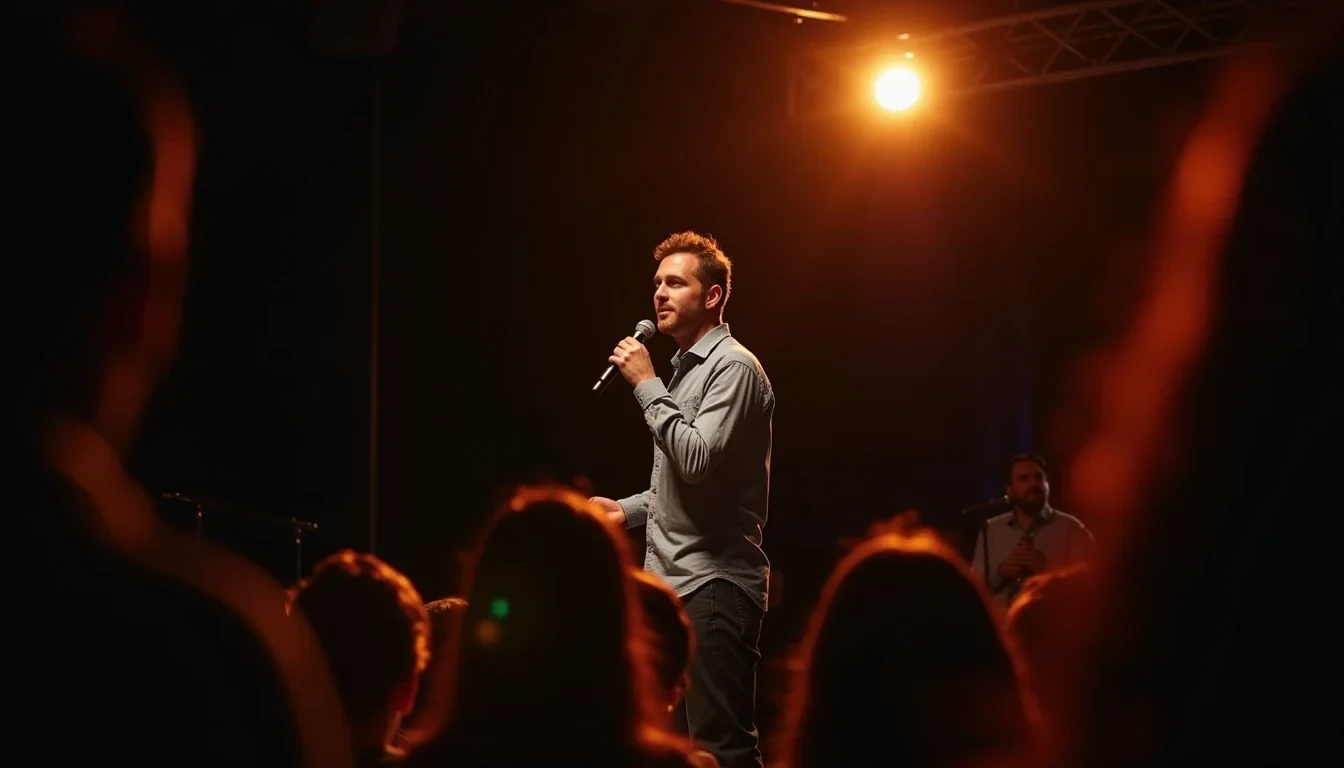
The voice is back at the center. Spoken word nights, poetry slams, and open mic events have restored something older than the modern poetry classroom. They make verse public again. They also strip away one of poetry’s biggest modern problems: the impression that it exists for a small circle of readers who already know the rules.
At a live event, the poem does not sit still. The performer’s timing changes the line. A pause can do what a metaphor cannot. A shouted word lands differently from a whispered one. Gesture, cadence, breath, eye contact—all of it becomes part of the text. That is not decoration. It is the form doing what it was always designed to do.
The energy in a slam is the opposite of the silent, dutiful reading many people associate with poetry. Crowds cheer. They react in real time. They score. They snap. They bring pressure, enthusiasm, and social energy into a space that academic poetry often keeps deliberately restrained. The form suddenly looks less like a relic and more like a contest, which explains its appeal to so many people who never felt invited into literary culture.
Digital platforms gave poetry a new audience
The internet did for poetry what old gatekeepers had failed to do: it removed the bottleneck.
Instagram made room for short poems that could be read in a glance and shared in a tap. Rupi Kaur became the most obvious emblem of that shift, with more than 4.5 million followers, but she is only one example of a larger change. Poetry now travels as an image, a caption, a screen-friendly fragment, a quote card, a few lines set against a blank background. Critics can sneer at the format. The audience keeps growing anyway.
TikTok pushed the same process further. On #PoetryTok, poets use short video to perform lines, combine text with sound, or turn a fragment into a miniature stage piece. The hashtag has drawn billions of views, a blunt reminder that people are still hungry for compressed emotional language when it is delivered in the right form. The medium is not the old printed magazine. The appetite is not gone.
X, with its character limits, encourages a different kind of compression. The result is micro-poetry, the kind of verse that lands in a handful of words and depends on precision rather than ornament. Some of it is fragile. Some of it is clever and forgettable. Some of it is sharp enough to travel farther than a poem in a thick journal ever could.
YouTube gave poetry something else: the feeling of being in the room. Button Poetry built an audience around filmed performances, slams, and readings, letting viewers across the world watch the same electrical moment that used to belong only to the people in the hall. This changes access. A student in one city, a commuter in another, and a teenager with headphones at home can all encounter the same performance at the same time.
Online literary magazines and blogs kept the archive alive while the platforms built the audience. Poetry Foundation, Verse Daily, and a long tail of independent sites made it easier to find new work, revisit older work, and move between voices without waiting for a publisher to hand you a curated list. Even Wattpad and fanfiction spaces have contributed to the wider ecology, because they let amateur writers publish directly, gather feedback, and build readers without passing through the old filters first.
Poetry no longer depends on permission.
Rap took poetry’s old tools and made them louder
If people want proof that poetry is not dead, they only need to listen more carefully to hip-hop.
Rap absorbed poetry, stretched it, and pushed it back into mass culture with more force than poetry itself had managed for decades. Multi-syllable rhyme, internal rhyme, slant rhyme, assonance, consonance, dense wordplay, layered metaphor—all of it sits inside rap as a working vocabulary. The technique is the engine.
Artists like Eminem build lines so tightly that the rhyme does structural work at the level of sound, not just at the ends of bars. Kendrick Lamar’s writing can move from confession to social critique without losing musical control. Nas on Illmatic maps a whole environment through tone, detail, and pacing. Common does something similar when he treats everyday urban experience as material for reflection rather than background noise.
This is poetry in motion, not poetry in costume.
Rap also revived the oral tradition in a way that printed poetry often forgot to. A verse in hip-hop is meant to be voiced, timed, embodied, and heard against a beat. The rhythm carries the argument. The line break becomes a bar. Delivery is the meaning.
The boundary between poetry and hip-hop has always been porous, even when cultural institutions pretended otherwise. Both forms depend on compression. Both turn lived experience into shaped language. Both can carry protest, grief, pride, humor, and memory without needing a novel’s worth of space.
The raw voice won
Poetry survived because it stopped pretending it had to sound polished in order to be serious.
Older ideas of “high” poetry often prized polish, symmetry, and formal control. Those qualities still matter in the right hands. But the mainstream appetite shifted toward something rougher and more immediate. People wanted direct feeling. They wanted lines that sounded spoken, not embalmed. They wanted work that could carry vulnerability without dressing it in museum glass.
Spoken word fed that appetite. So did digital poetry. So did rap. The old rhyme schemes did not disappear, but they stopped being the only badge of seriousness. A piece does not need a perfect sonnet frame to hit hard. A fragmented confession on a phone screen can land as forcefully as a formal lyric if the language is alive enough.
Poetry corrected its own reputation. It ceased asking to be respected on old terms and started proving it could move across new ones.
The pace of the internet worked against silence, then poetry adapted
People think poetry struggles now because digital culture rewards speed. Feeds update constantly. Video interrupts reading. Headlines arrive in blasts. Prose is built for scanning, and scanning is the default mode of the web.
Poetry asks for a different tempo. It slows you down. It makes you reread. It asks you to hear syntax instead of just information. In a culture organized around frictionless consumption, that can look like weakness. It is actually a kind of resistance.
The mistake is to assume that slower forms cannot survive in faster environments. They can, if they change shape. Poetry online often does not look like the shelf in a library. It looks like a square image, a caption, a clipped performance, a short video, a verse posted without explanation. It has learned to survive by becoming portable.
That portability has also changed the social life of poetry. A poem can now spread the way a joke or a chant spreads. It can be reposted, quoted, remixed, and turned into a personal statement by someone who does not identify as a poetry reader. That is a bigger cultural footprint than many “serious” poems ever had inside the old print world.
The public did not leave poetry, it changed where it listened
The real myth is not that poetry has become irrelevant. The myth is that the only legitimate poetry was the kind housed in old institutions.
That belief has always been too narrow. It mistakes one set of distribution channels for the form itself. A poem is not a publication category. It is a way of shaping language so it can carry more pressure than ordinary speech. When that pressure appears in a rap verse, a slam performance, an Instagram post, or a short video watched by millions, the form has not died. It has changed containers.
People still respond to poetic language even when they claim not to like poetry. Rhythmic speech reaches places plain exposition does not. A compressed image can land harder than a long explanation. A repeated line can lodge in memory like a hook. Humans have not stopped being responsive to those effects just because the school syllabus made them miserable.
Poetry’s problem was never that it ran out of power. It was that too many institutions confused difficulty with depth, and reverence with relevance. The public moved on. Poetry did too.
The surprise is not that it survived. The surprise is that it found better company in the internet, the stage, and the recording booth than it ever had in the rooms that kept declaring it finished.